Step-by-Step Instructions (Hearty, Authentic, Foolproof)
1. Simmer the Cabbage
In a large pot, melt butter over medium heat. Sauté onion until soft (5 mins).
Add cabbage, caraway seeds, and optional bacon or apple. Cook 5–7 minutes to soften slightly.
Pour in broth and add bay leaf. Bring to a simmer.
Cover and cook on low heat 30–45 minutes, stirring occasionally, until cabbage is very tender.
Stir in vinegar or wine, season with salt & pepper. Remove bay leaf.
2. Make the Dumplings
While cabbage simmers, mash boiled potatoes until smooth. Cool 5 minutes.
Stir in egg, salt, nutmeg, and potato starch until just combined (dough should hold together but be soft).
Chill 10 minutes if too sticky.
3. Form & Cook Dumplings
Bring a large pot of salted water to a gentle simmer (not boil).
Wet hands and form dough into 8–10 golf-ball-sized dumplings.
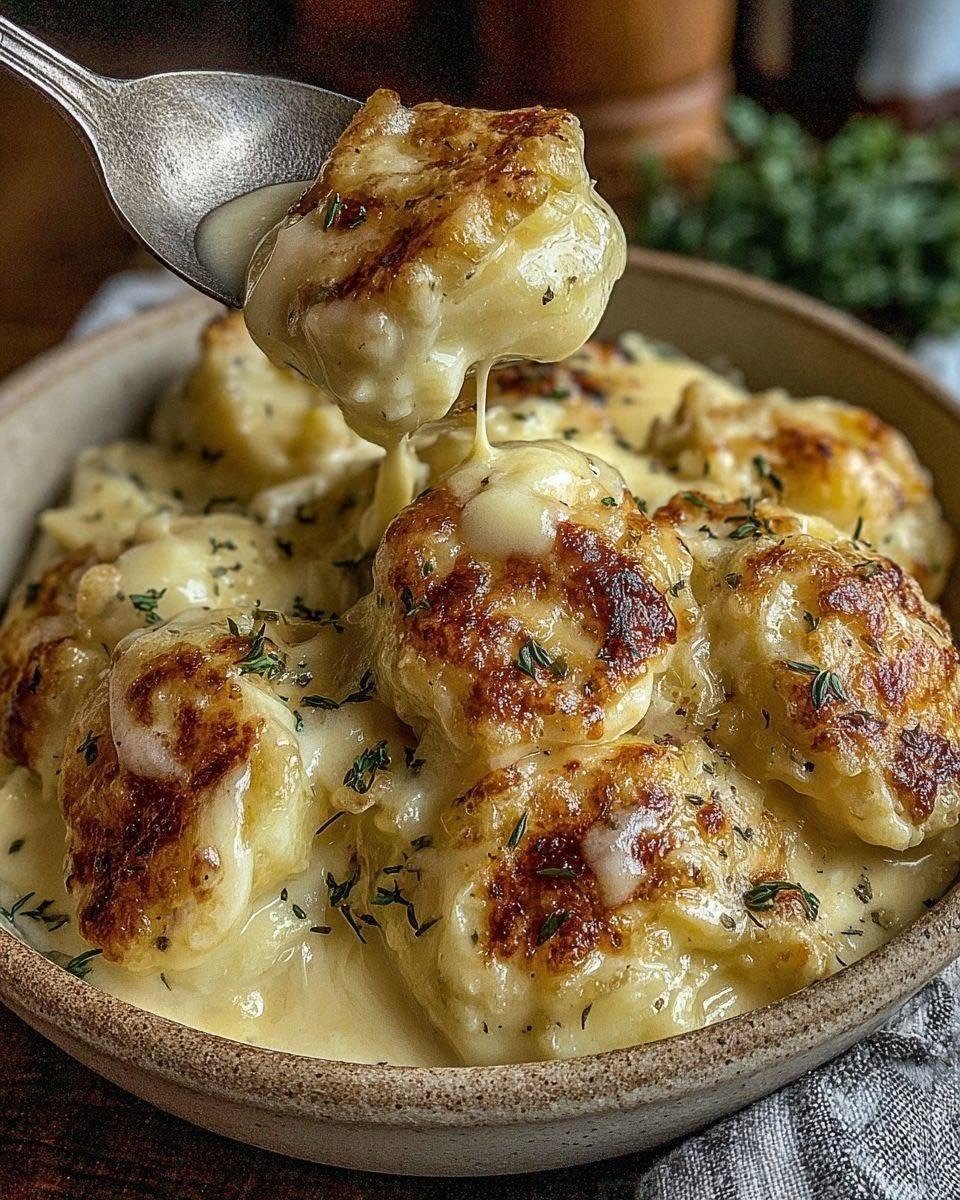
Gently lower into water. Simmer 15–20 minutes (they’ll float when done).
Do not boil vigorously—dumplings will fall apart.
4. Serve Together
Ladle warm cabbage stew into bowls.
Place 1–2 dumplings on top.
Drizzle with a little broth. Serve with whole-grain mustard on the side.
Traditional Variations
Bread Dumplings (Semmelknödel): Use stale bread cubes, milk, egg, and parsley (not GF).
Sauerkraut Version: Use all sauerkraut—rinse if too sour, and add a pinch of sugar.
Meat Lover’s: Add diced smoked sausage or pork shoulder to the stew.
Serving Suggestions
🥖 With dark rye bread and sweet butter
🥣 With a dollop of sour cream or applesauce (common in Bavaria)
🍷 Drink pairing: Dry Riesling or a malty lager
Make-Ahead & Storage Tips
Cabbage stew: Tastes better the next day! Keeps 3–4 days.
Dumplings: Best fresh—but can be reheated gently in broth.
Freeze stew (without dumplings) up to 2 months.
❤️ The Bottom Line
German Cabbage and Dumplings isn’t fancy—but it’s deeply nourishing, historical, and full of heart. It’s the kind of meal that fed families through hard winters and celebrates the beauty of simple food done well.
So shred that cabbage, mash those potatoes, and cook with intention. Because the best traditions aren’t preserved in museums—they’re simmered in pots and shared at the table.
“Good food doesn’t shout—it whispers stories of fields, forests, and resilience.” 🥬🥔✨
For Complete Cooking STEPS Please Head On Over To Next Page Or Open button (>)